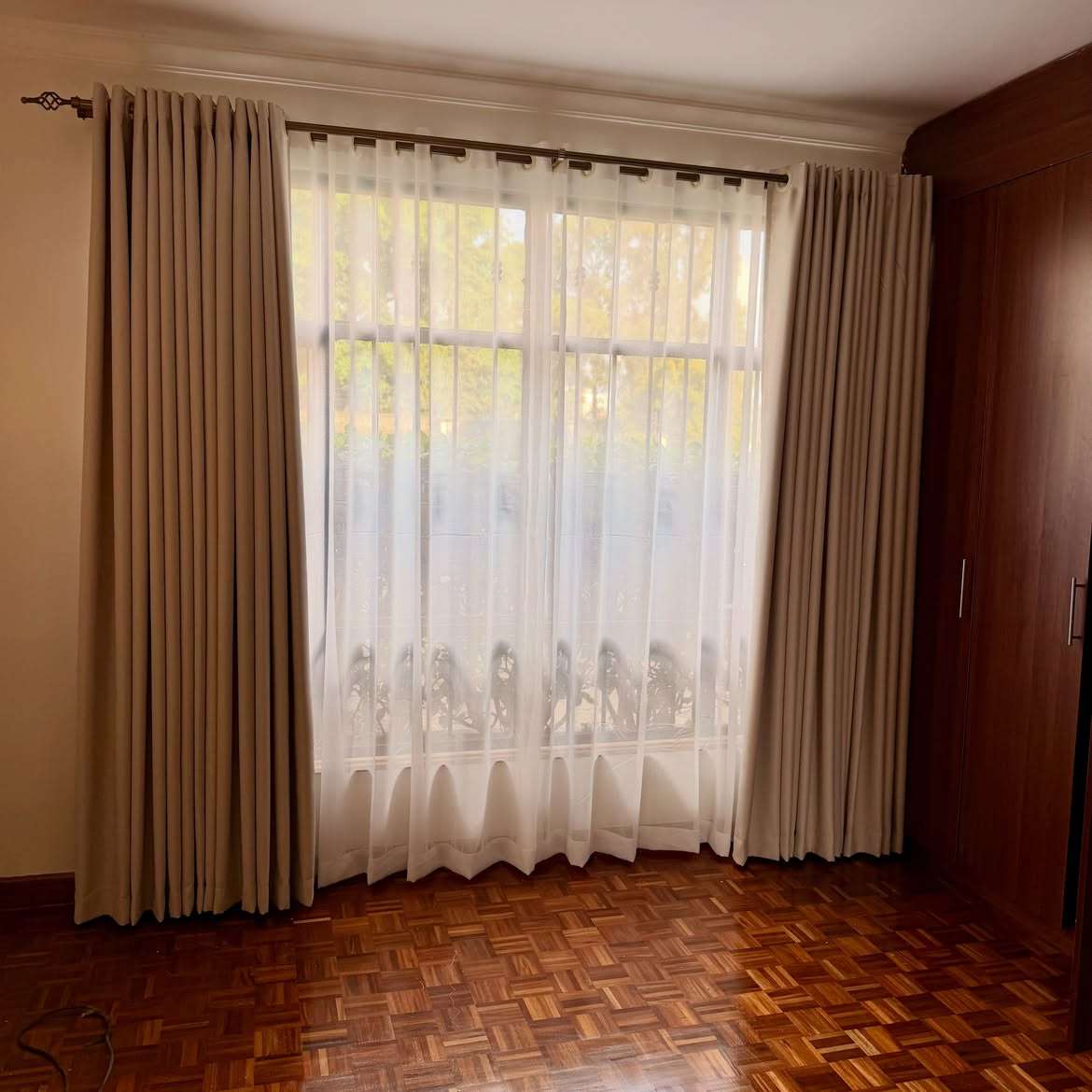
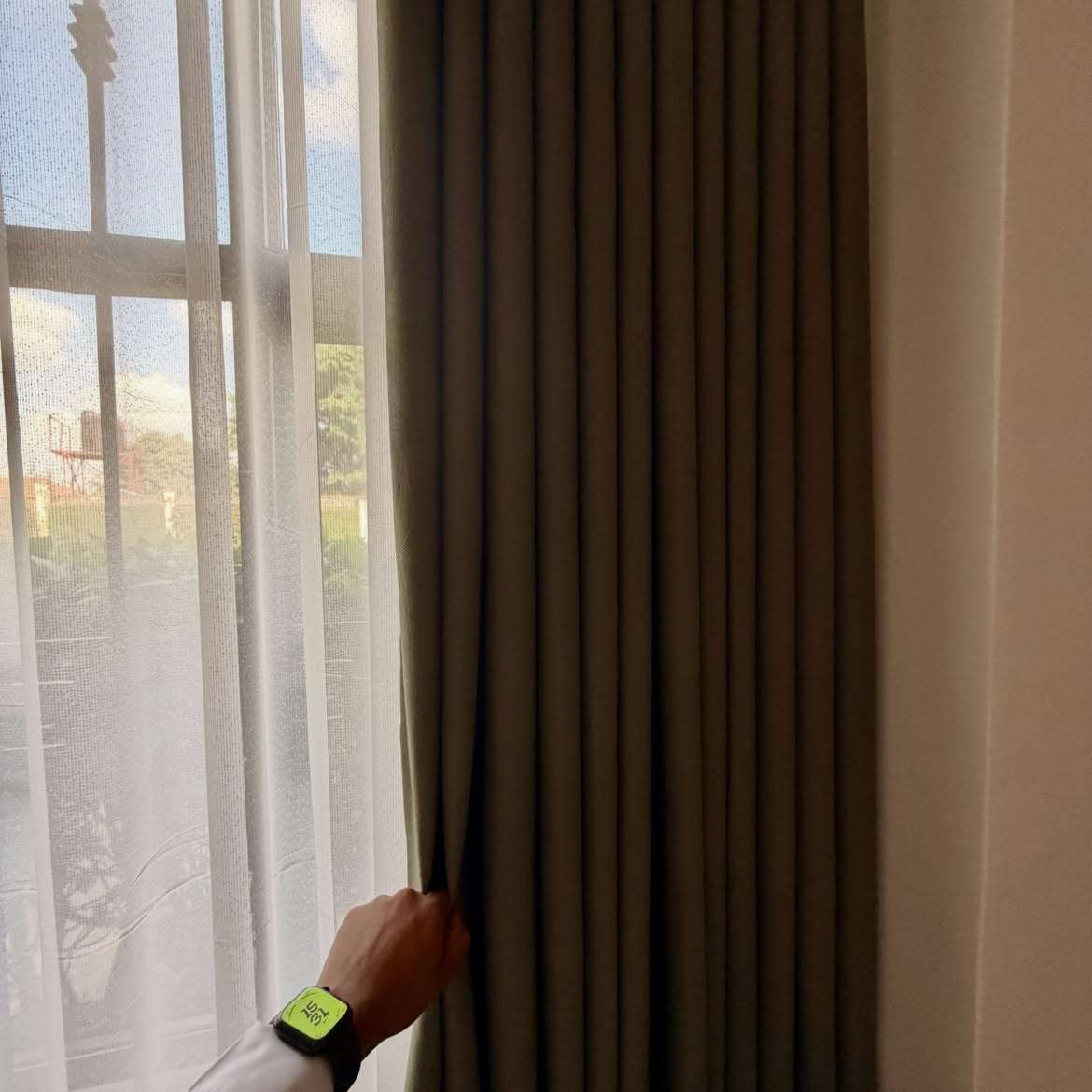
Why Curtain Lining Matters More Than Many People Realise
When choosing curtains, most people concentrate on the visible fabric, colour and design. However, what is placed behind the decorative fabric can have a major effect on how the finished window treatment performs.
Curtain lining in Kenya can improve light control, privacy, insulation, fabric stability and overall appearance. It can also give a curtain a fuller, more structured appearance compared with an unlined decorative fabric.
This makes lining particularly useful when designing bedrooms, living rooms, apartments, executive residences, hospitality spaces and other interiors where appearance and functionality both matter.
The right lining should therefore be selected according to the purpose of the room rather than simply added as an afterthought.
What Is Curtain Lining?

Curtain lining is a secondary fabric or material attached behind the main curtain fabric.
The decorative fabric remains the visible side facing the room, while the lining sits between the curtain and the window.
Depending on the type selected, lining can help:
- Reduce incoming daylight
- Increase privacy
- Give curtains more body
- Improve the way curtains hang
- Protect decorative fabric from direct sunlight
- Improve room comfort
- Create a more substantial finished appearance
- Provide additional control over the amount of light entering a room
Not every window requires the same type of lining. The ideal solution depends on the room, orientation of the window, fabric selected and desired level of light control.
Blackout Lining for Bedrooms and Light-Sensitive Rooms
Bedrooms are one of the most obvious applications for blackout lining.
Street lighting, early morning sunlight and strong afternoon sun can make a room uncomfortable for people who need a darker sleeping environment.
A blackout lining can substantially reduce light passing through the curtain construction.
It can therefore be useful for:
Master bedrooms
A lined curtain can provide greater darkness and privacy while maintaining the decorative appearance selected for the room.
Children’s bedrooms
Reducing excessive morning light can help create a more controlled sleeping environment.
Media and entertainment rooms
Lowering ambient light can make screens easier to view during daytime.
Guest rooms
Well-designed lined curtains can give visitors greater privacy and control over their environment.
The important point is that blackout performance depends on the entire window treatment—not simply the word “blackout” attached to a fabric.
Gaps around the sides, top and bottom can still allow light into a room, which is why proper curtain design and installation matter.
Can Curtain Lining Help With Heat?

Yes, depending on the lining material and window conditions.
Windows exposed to strong sunlight can allow substantial solar heat into a room. A suitable lining can provide another layer between the interior and the glass.
This does not mean curtains should be treated as a replacement for professional building insulation. Instead, they can form part of a broader strategy for improving indoor comfort.
This can be particularly useful for:
- Sun-facing bedrooms
- Large glazed living areas
- Apartments with extensive windows
- Offices exposed to direct afternoon sunlight
- Hospitality rooms
- Spaces where excessive glare is a problem
The correct combination of curtain fabric, lining and window orientation can make a noticeable difference to the practical performance of the finished treatment.
Protecting Decorative Curtain Fabric
Sunlight can gradually affect certain fabrics.
Over time, prolonged exposure may contribute to fading or deterioration, particularly when windows receive intense direct sunlight.
A suitable lining creates an additional layer between the decorative fabric and the window.
This means the lining is not only about what happens inside the room. It can also help protect the investment made in the visible curtain fabric.
For premium curtains, this can be especially valuable because the decorative fabric may have been selected for its texture, colour, pattern or overall interior-design effect.
Lined Curtains Can Look More Structured
Lining can also influence appearance.
An unlined lightweight curtain may have a softer and more casual appearance, while a lined curtain can have additional weight and structure.
This can help create:
- Fuller-looking curtain panels
- More controlled folds
- A richer appearance
- Better visual coverage
- A more substantial finish
The result depends on the fabric, construction, heading style, fullness and installation system.
Therefore, lining should be considered as part of the complete curtain specification rather than as an isolated material choice.
Where Lined Curtains Make Sense in Kenya
Different spaces have different requirements.
Nairobi apartments
Apartments can benefit from lining where privacy, street lighting, morning sunlight or afternoon heat are concerns.
Family homes
Bedrooms and living areas may require different levels of light control, making customised lining useful.
Executive residences
Where premium fabrics and sophisticated interiors are being used, lining can contribute to both appearance and functionality.
Hotels and hospitality spaces
Guest comfort, privacy and effective light management can be important considerations when selecting window treatments.
Commercial interiors
Certain workspaces may benefit from reduced glare and more controlled daylight, particularly around screens and glass-heavy elevations.
Coastal properties
Properties in coastal areas can require careful consideration of sunlight, humidity and fabric selection. The lining should be selected as part of a complete window-treatment specification suitable for the environment.
How to Choose the Right Curtain Lining
There is no single lining that is automatically correct for every window.
Before specifying one, consider these questions:
1. How much light needs to be controlled?
A bedroom requiring substantial darkness may need a different solution from a living room designed to retain natural daylight.
2. Is privacy the main concern?
If the window faces a neighbouring building, road or busy public area, privacy may influence the lining decision.
3. Does the window receive strong direct sunlight?
Sun exposure can influence both comfort and the long-term condition of the decorative fabric.
4. What is the main curtain fabric?
Lightweight sheers, medium-weight decorative fabrics and heavier drapery fabrics can behave differently when combined with lining.
5. What appearance do you want?
If the objective is a structured, substantial curtain, the lining specification should support that visual effect.
Curtain Lining Should Be Planned Before Fabric Is Made
One common mistake is choosing the decorative fabric first and thinking about lining only after the curtain is already being manufactured.
For custom curtains, it is better to consider the complete construction before fabrication.
The specification can include:
Window → lining requirement → main curtain fabric → heading/construction → track or rod → installation
This approach makes it easier to match the visual appearance with the functional requirements of the room.
It also helps prevent situations where a beautiful curtain fabric is selected but does not provide the level of privacy or light control the client expected.
Professional Curtain Planning Makes a Difference
A high-quality curtain is more than a piece of fabric hanging over a window.
The final performance depends on several connected decisions, including fabric selection, lining, dimensions, fullness, heading construction, supporting hardware and installation.
For that reason, homeowners, designers, contractors and property developers should consider the intended use of the room before specifying window treatments.
At Kalus Top Curtains, curtain solutions can be planned around the specific requirements of the space, helping clients select suitable fabrics, lining options, curtain hardware and installation approaches.
Final Thoughts
The visible curtain fabric may receive most of the attention, but the hidden construction can have a major effect on performance.
The right curtain lining in Kenya can help improve privacy, manage unwanted daylight, protect decorative fabric and create a more substantial finished appearance.
For bedrooms, sun-exposed rooms, premium residences, hospitality projects and other spaces requiring greater control, lining deserves to be considered during the initial design stage—not after the curtains have already been made.
If you are planning custom curtains in Kenya, Kalus Top Curtains can help you assess the requirements of your windows and select a complete window-treatment solution suited to the space.
Curtain lining is a secondary layer fitted behind the main curtain fabric. It can improve light control, privacy, appearance, fabric protection and overall curtain performance.
Yes. Blackout lining can substantially reduce daylight entering a bedroom and can be useful where occupants require a darker sleeping environment.
Yes. A suitable lining can provide an additional barrier between decorative curtain fabric and direct sunlight, potentially helping reduce the effects of prolonged exposure.
It can contribute to better control of solar heat entering through windows, although its effectiveness depends on the lining, curtain construction, glazing and window orientation.
Ideally, yes. Lining should be considered alongside the main fabric, curtain construction, hardware and intended function of the room so the complete window treatment works as one system.
Visit our online curtain store by clicking here
Click here to view our facebook page
Click here to view our instagram profile