Why Bay and Corner Windows Need Special Planning
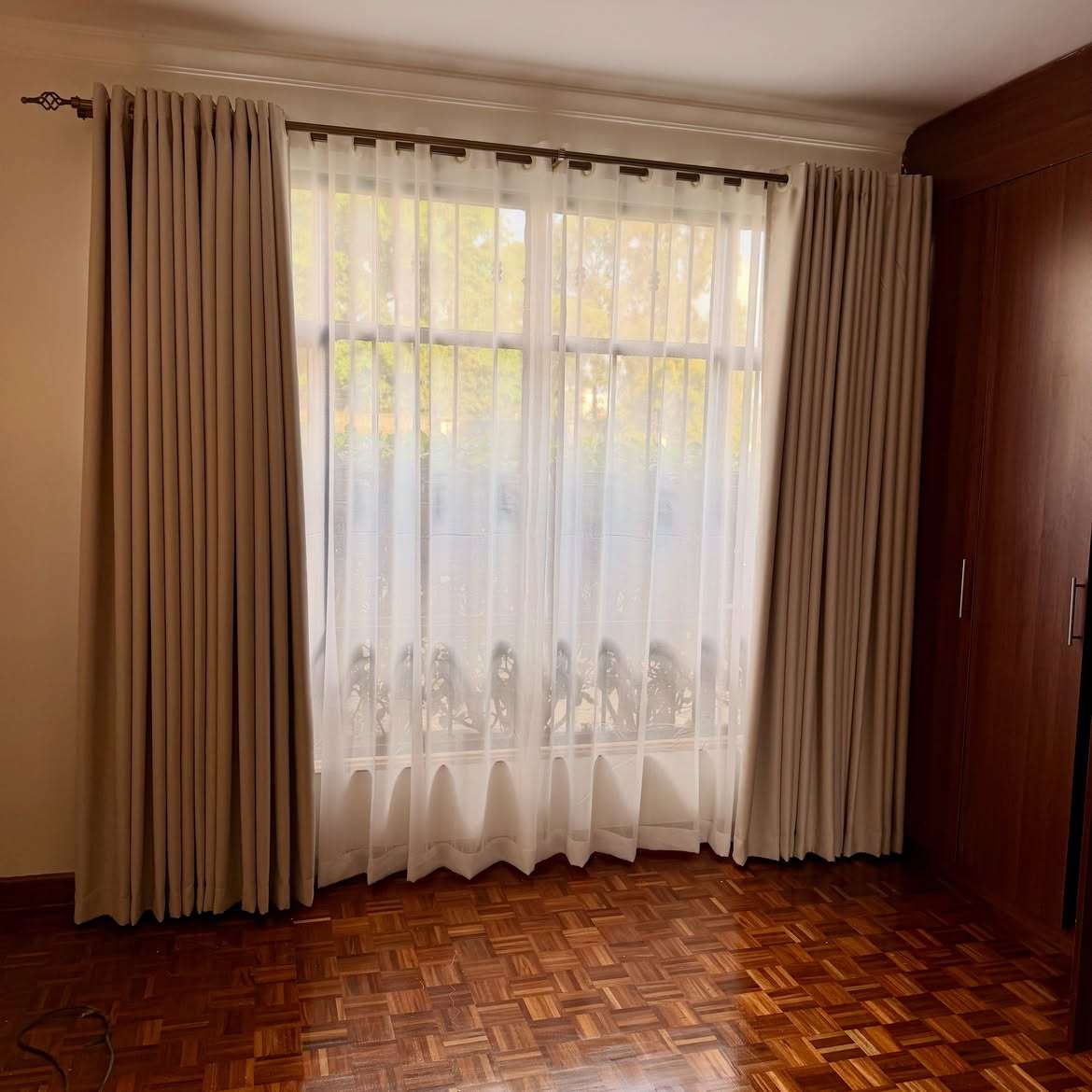
A standard rectangular window is relatively straightforward to cover.
Bay windows, corner windows and angled openings are different.
The curtain has to work around changes in direction while still looking intentional and allowing the window to function properly.
For homeowners searching for bay window curtains Kenya, the challenge is therefore not simply choosing fabric.
The real question is:
How can the window treatment follow the architecture without making the room feel crowded or difficult to use?
Common Problems With Angled Windows
Unusual windows can create several practical problems.
A poorly planned curtain may:
- Stop short of part of the window
- Block access to opening sections
- Collide with furniture
- Leave awkward gaps at corners
- Become difficult to draw
- Create excessive fabric accumulation
- Make the room feel visually smaller
These issues are usually easier to prevent during planning than to correct after installation.
The Window Shape Should Determine the Hardware
Curtain hardware should follow the architecture.
Depending on the window configuration, a suitable solution may involve:
- Multiple connected sections
- Corner-compatible tracks
- Special brackets
- Flexible track systems
- Separate curtain panels
- Carefully positioned operating points
The correct choice depends on the actual shape and dimensions of the opening.
Bay Windows Are Not All the Same
A bay window can project outward in several configurations.
Some have:
- Three main sections
- Wider central glazing
- Narrow side windows
- Equal-angle sections
- Different-sized panels
Because of this, a generic curtain arrangement may not provide the best result.
The window should be assessed as an architectural feature rather than treated as several unrelated windows.
Corner Windows Create a Different Challenge
A corner window joins two walls.
If the curtain hardware is installed without considering the corner, the fabric may struggle to move from one side to the other.
Furniture can make this even more difficult.
A sofa, cabinet or bed positioned close to the corner may interfere with curtain movement.
This is why furniture layout and window-treatment planning should be considered together.
Should Curtains Cover the Entire Bay?
Not necessarily.
The appropriate coverage depends on:
- Desired privacy
- Window operation
- Furniture position
- Amount of daylight
- Curtain style
- Available wall space
In some interiors, covering the full architectural opening creates the strongest visual effect.
In others, independent panels may make the windows easier to use.
There is no universal arrangement for every bay window.
When a Track Can Be More Practical
A curtain track can be useful when the window requires movement through a corner or along a non-standard path.
Tracks can also provide a cleaner visual appearance in modern interiors where decorative rods are not the desired focal point.
The important factor is selecting a system that matches the geometry of the window and the weight of the curtain.
Think About Natural Light
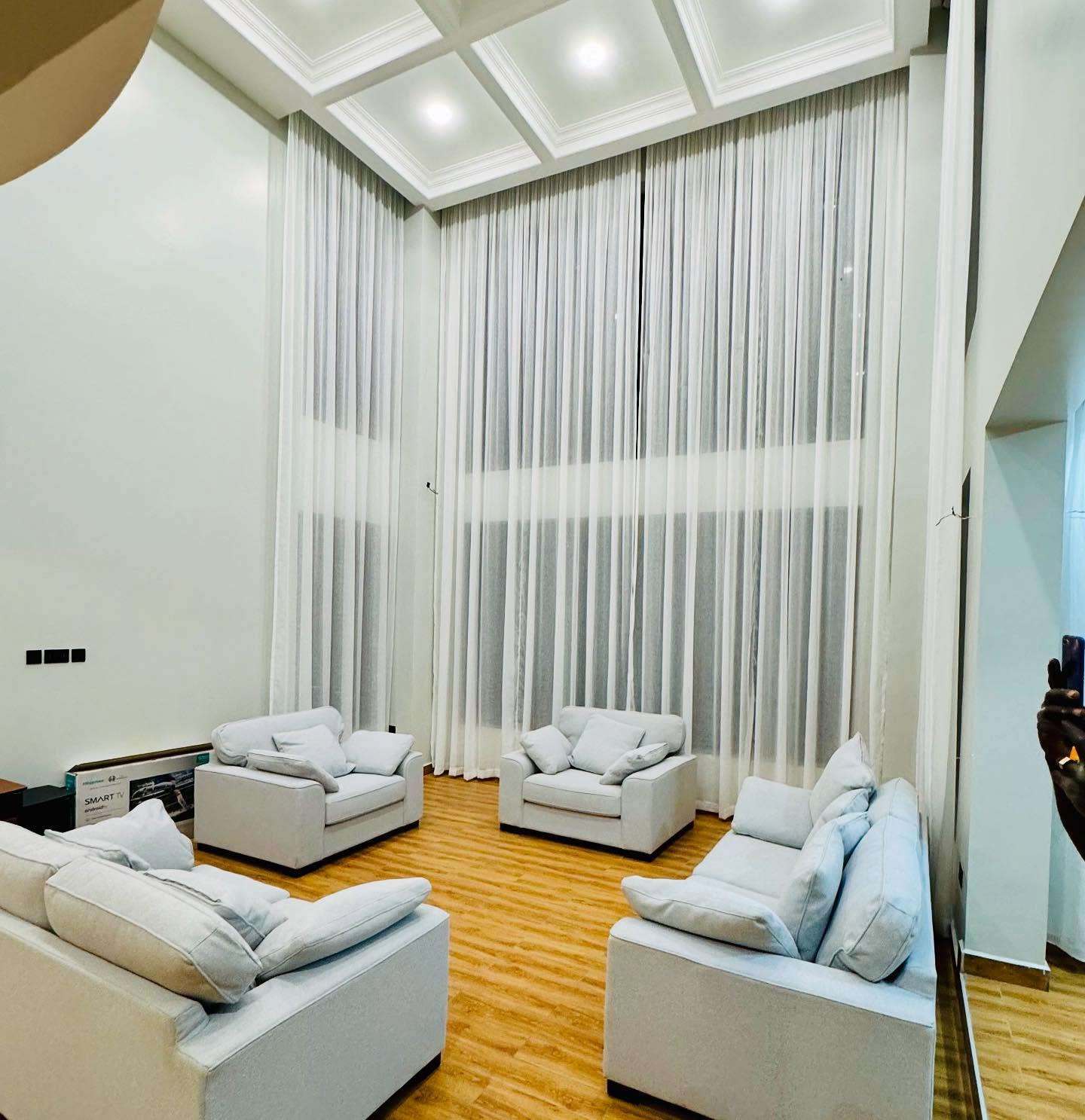
Bay windows often bring significant daylight into a room.
The window treatment should therefore be designed so that occupants can control light without unnecessarily blocking the entire opening when the curtains are open.
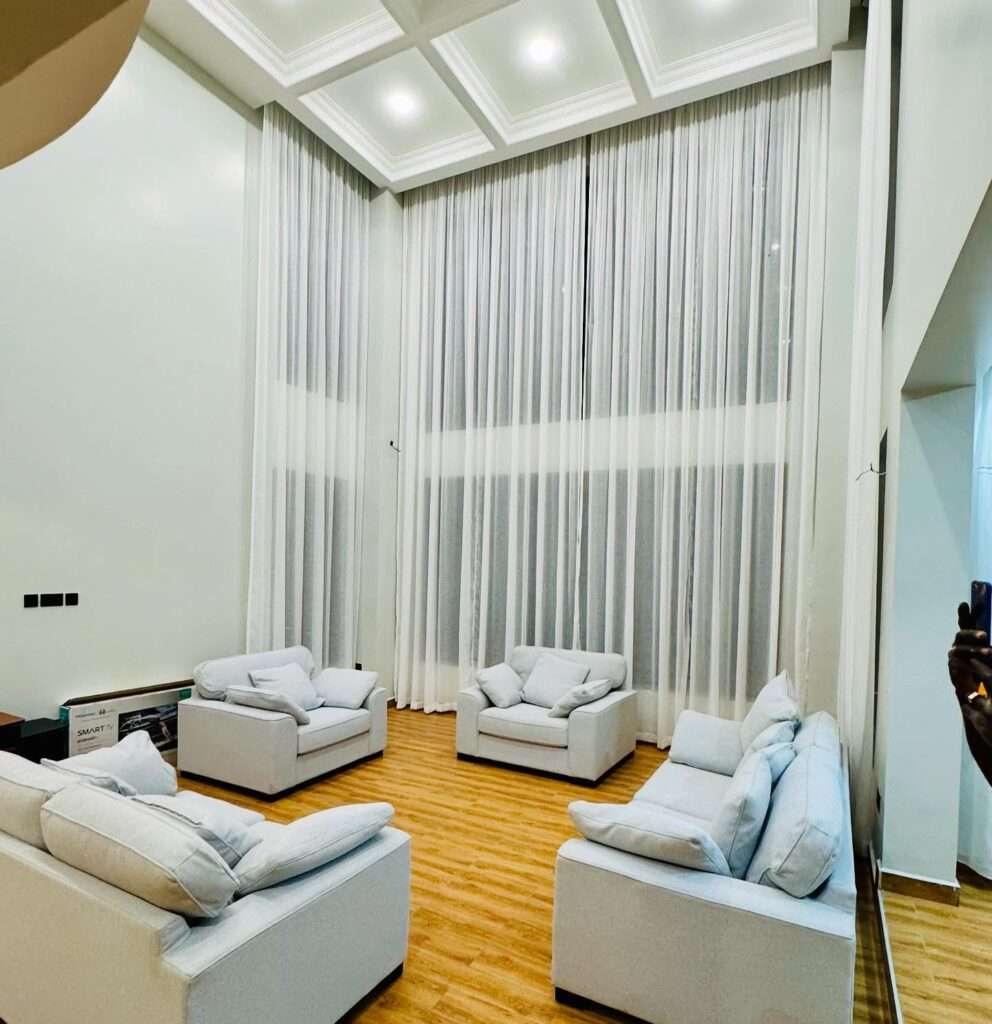
This is particularly important in living rooms and open-plan interiors where daylight contributes to the atmosphere of the space.
Furniture Placement Can Make or Break the Installation
Before installing curtains around an unusual window, consider what sits underneath it.
Potential obstacles include:
- Sofas
- Armchairs
- Desks
- Beds
- Cabinets
- Radiators or ventilation equipment
- Decorative shelving
The curtain should have sufficient operating space.
A beautiful window treatment that cannot be opened comfortably is not a successful solution.
Unusual Windows Are Common in Modern Architecture
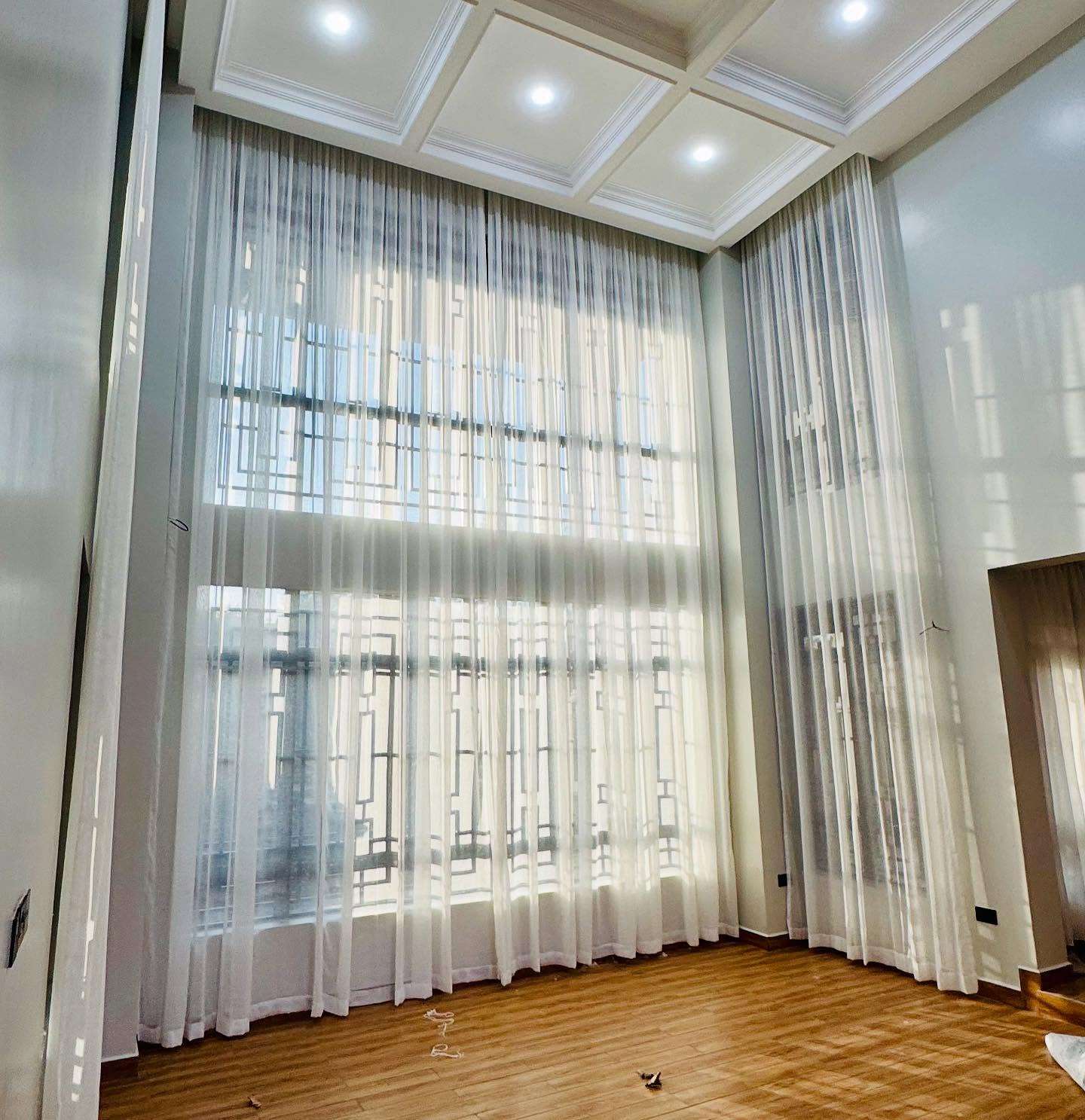
Contemporary Kenyan homes and commercial properties increasingly use larger glazed areas and distinctive architectural layouts.
That creates opportunities for more interesting interiors—but also requires greater attention to window-treatment planning.
Architects, contractors, interior designers and homeowners should consider curtain hardware before the final finishes are completed.
Planning During Construction Saves Problems Later
For new construction or renovation projects, curtain requirements can be considered before walls and ceilings are completely finished.
This can help determine:
- Where tracks should be positioned
- Where brackets can be fixed
- Whether ceiling mounting is appropriate
- How curtains will clear doors
- How furniture will interact with the window
- Whether special hardware is required
Early coordination can reduce the need for visible compromises later.
What About Corner or Curved Tracks?
Specialised track systems can be considered where the window geometry requires movement around an angle or curve.
However, the track should be selected according to:
Window shape + curtain weight + operating method + fixing surface
Simply choosing a flexible track because the window is unusual does not automatically guarantee good performance.
A Practical Inspection Checklist
Before ordering curtains for a bay or corner window, check:
- Number of window sections
- Angles between sections
- Total opening width
- Window height
- Wall space beside the opening
- Furniture clearance
- Opening direction of windows and doors
- Required curtain movement
- Curtain weight
- Mounting surface
- Preferred operating method
This information gives the installer a much clearer picture of the project.
Kalus Top Curtains for Non-Standard Windows
At Kalus Top Curtains, unusual windows can be approached as individual design problems rather than forced into standard curtain arrangements.
The objective is to coordinate the curtain, hardware and room layout so the finished treatment works with the architecture.
This approach can be particularly useful for custom residential projects, apartments, offices and developments where window shapes vary from room to room.
Final Thoughts
Bay window curtains Kenya require more planning than ordinary straight-window installations.
The shape of the opening, furniture placement, curtain weight, operating direction and hardware all influence the final result.
Instead of trying to adapt a standard curtain arrangement after the fact, assess the window as a complete architectural feature.
That can produce a cleaner appearance, easier operation and better use of the available space.
Sometimes, but the suitability depends on the bay configuration. Angled sections may require specialised brackets, multiple sections or a suitable track system.
They can be suitable where the system is designed to accommodate the window’s geometry and curtain weight.
Ideally, the furniture layout should be considered during curtain planning because sofas, beds and cabinets can affect curtain movement.
Yes, depending on the design and available wall space. However, separate curtain sections may sometimes provide easier operation.
Yes. Custom planning is particularly useful when window dimensions, angles or architectural details differ from standard rectangular openings.
Visit our online curtain store by clicking here
Click here to view our facebook page
Click here to view our instagram profile